One room, one task
Start with a Blender model: collect objects, light a fire and open a mini-game.
Download ZIP · Source codeAI game development · 22 September 2026 · Public course notes
Games give us a way to create and a window into learning. Alongside progress on the game itself, we look at how learners communicate, collaborate, design and make decisions, and how their interests and attention develop during the process.
This session drew our attention to six areas. These questions help us revisit specific moments and guide further observation. They are not scores of learners’ abilities, nor evidence that those abilities have already improved.
Can teammates and AI understand the same request? Can learners explain the player’s actions, goals and outcomes? When a generated result differs from the idea, first check whether the request was clear, then consider whether the implementation went wrong.
Who suggests ideas, who operates the tools, and who tests the game? How are disagreements resolved? Notice whether everyone participates in decisions, as well as whether they work together on the game.
Do starting, playing, winning, losing and restarting fit together? What happens after repeated clicks, when resources run out, or when a player reaches a boundary? Use playtesting to reveal gaps, then add a rule that can be tested.
Which requirements did AI implement, which did it miss, and which features only appear to work until someone tests them? Distinguish unclear requests, undecided rules, platform limitations and generation errors. Avoid blaming learners for every problem or leaving the judgement to AI.
Which kinds of gameplay do learners bring up themselves? Which details are they willing to keep improving? Record what they enjoy experiencing and what they want to keep creating separately, leaving room for interests to change.
Observe playing, discussing, waiting for generation, troubleshooting and repeated refinement separately. Record the task and situation. One distracted moment does not establish a lack of focus, and a long time looking at a screen does not necessarily mean productive engagement.
The session provided a starting point for continued creation. The following activities are suggestions for later work, not a claim that every group completed them that day.
Explain what the player does, how they know whether they have succeeded or failed, and how to try again. Leave extra maps, items and complex features for a later version.
We want to make a small browser game in the [game genre] genre. The player uses [one main action] to achieve [goal], and fails when [failure condition]. Explain the controls at the start, show the result at the end, and allow a restart. Support both computers and phones. Leave out [features to defer] in the first version. First, restate the rules and ask us about anything unclear.
During playtesting, [what actually happened] occurred at [location or action]. We want [expected result]. Please change only this and keep the rest of the gameplay. Explain how we can check the change afterwards.
AI’s output does not decide what the game ought to be. The group chooses the rules, checks the results and decides which changes to keep.
One person describes the rules, one uses the platform, and one playtests and records problems. Swap roles in the next round so that everyone helps make decisions and check results.
AHA Space explores the theme of rational inquiry and a gentle approach to life. We plan to connect learners’ games to it: players explore the space, complete tasks and discover hidden entrances to other games.
An entrance invites real players to try a game; it is not a trophy reserved for finished work. Games can keep evolving, with more entrances added as new work is shared. We hope these connections encourage continued refinement. Whether they sustain engagement is something to observe over time.
Before linking a game, we check its link, basic controls and suitability of content. Works in progress are identified honestly; a first submission is not treated as a finished game.
Explore the AHA small world ↗Game entrances become available as services launch and are updated. Describing an entrance here does not mean every service is already available.
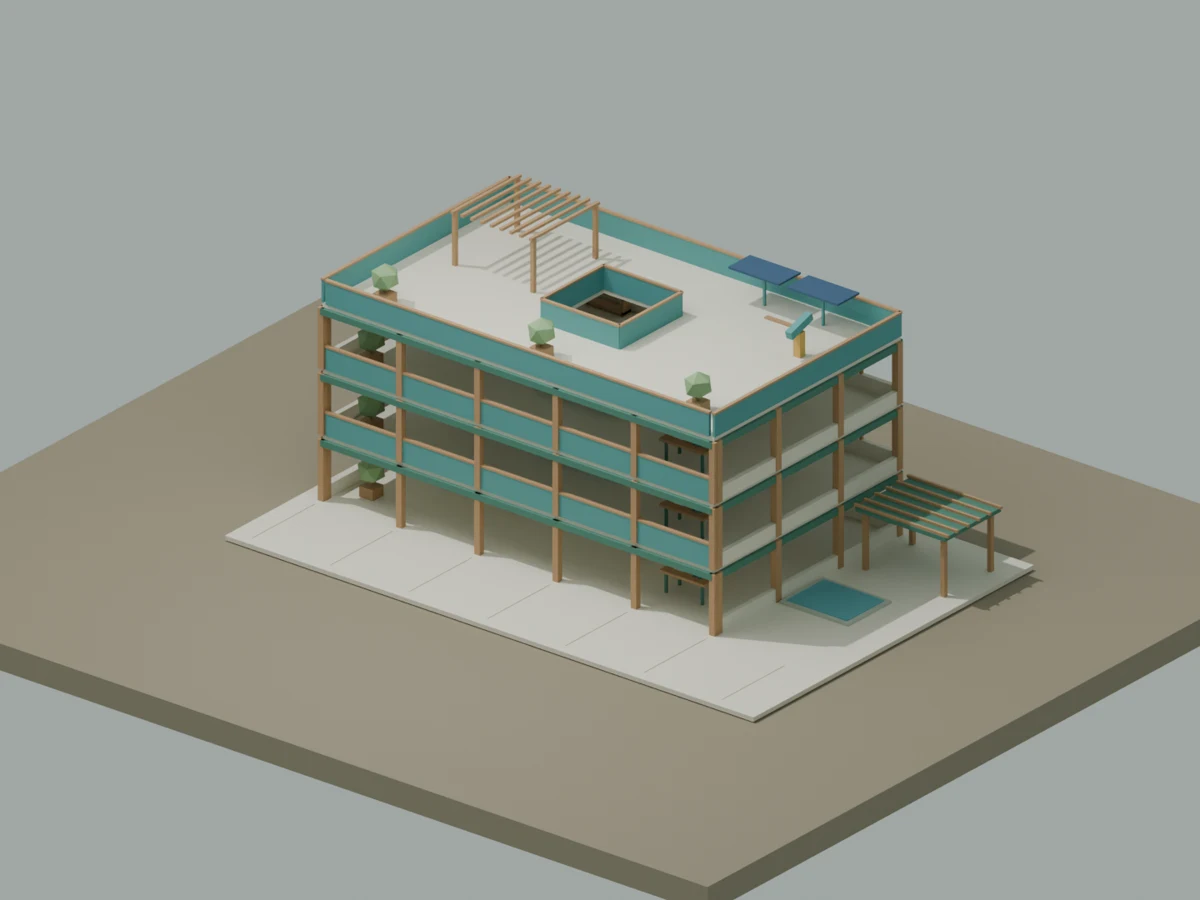
Start with a Blender model: collect objects, light a fire and open a mini-game.
Download ZIP · Source codeAn independent building example with exploration, construction, guest multiplayer and an optional AI companion.
Download ZIP · Source codeReconstruct a mesh from public calibrated photos, then repair, compare and render.
Download ZIP · Source codeInstructions are primarily in Chinese. Reconstruction targets Windows; a full run on a fresh machine has not been verified.
Read this public article for more observations and reflections on the session.
Read the related article ↗Which part do players most want to try again? Where do they still need the creator to explain? What would your group like to change first in the next version?
Alongside a more complete game, we hope to see a clear explanation of why a change was made.